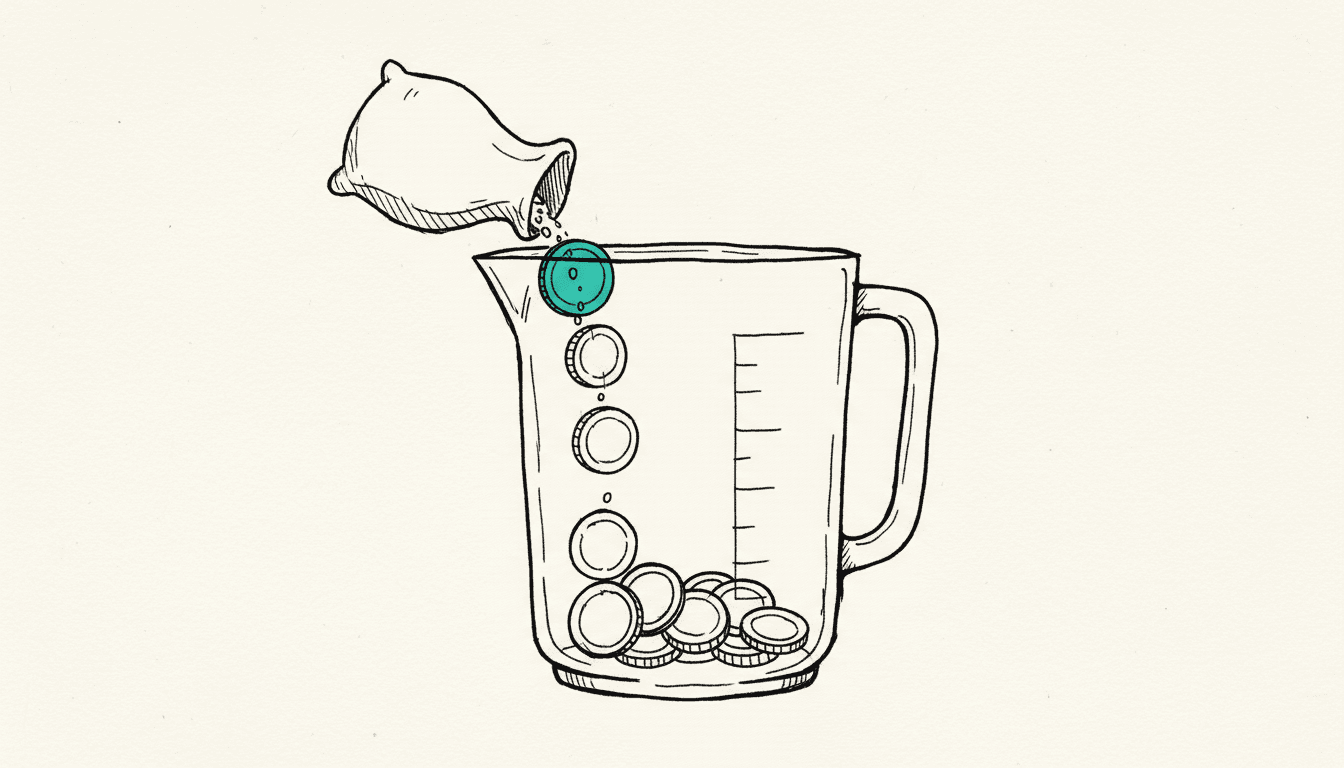
De minimis is the EU rule for small amounts of aid: state grants up to 300,000 euros within three years are considered too small to distort competition in the single market, and may therefore be paid out without EU approval. The basis is Regulation 2023/2831, which replaced the earlier cap of 200,000 euros. The de minimis declaration, which accompanies almost every grant application, is your self-disclosure of how much of this allowance your company has already used.
How does the 300,000 euro threshold work?
All de minimis aid that a company has received in the past three years is counted, on a rolling basis as of the date of the new approval. What matters is the concept of a single undertaking: affiliated companies, such as parent and subsidiary companies, share the allowance. The declaration must therefore include all de minimis notices of the corporate group, with date, grantor and amount, as shown in the approval decisions. You should keep these notices anyway, as the retention period is up to ten years depending on the program.
Why is this important for digitalization funding?
Many of the currently open programs run as de minimis aid, for example in Mecklenburg-Vorpommern the new AI funding MV. Each of these grants uses up allowance from the same budget. For planning purposes this means: anyone wanting to fund several projects should keep track of the order and the amounts, so that the most important application does not fail due to an exhausted threshold. False or omitted information in the declaration later leads to a reclaim, even years later during an audit.
Frequently asked questions about the de minimis declaration
What counts as de minimis aid?
Only funding that is explicitly designated as de minimis aid in the approval notice, along with the aid value stated there. Grants on another legal basis, for example under the General Block Exemption Regulation, as with many innovation grants, do not count against the 300,000 euro threshold. The notice is the reliable source, not your memory.
What happens if the declaration contains false information?
The approval is based on your self-disclosure: if it later turns out that aid was missing and the threshold was exceeded, the grant will be reclaimed, possibly with interest. Therefore keep a simple list of all de minimis notices of the corporate group, then every new declaration can be filled out correctly in five minutes.
Does the threshold apply per program or overall?
Overall: the 300,000 euros are a shared cap for all de minimis aid of a corporate group within three years, regardless of which program, country or municipality it comes from. A company that fills the allowance with smaller grants can thereby block a later, larger project.
Do loans and guarantees also count against the threshold?
Yes, if they are granted as de minimis aid, though not with the full loan or guarantee amount, but with the aid value stated in the notice, the so-called gross grant equivalent. A subsidized loan of 200,000 euros therefore uses up significantly less allowance than a grant of the same amount. The value stated in the de minimis certificate is always decisive.