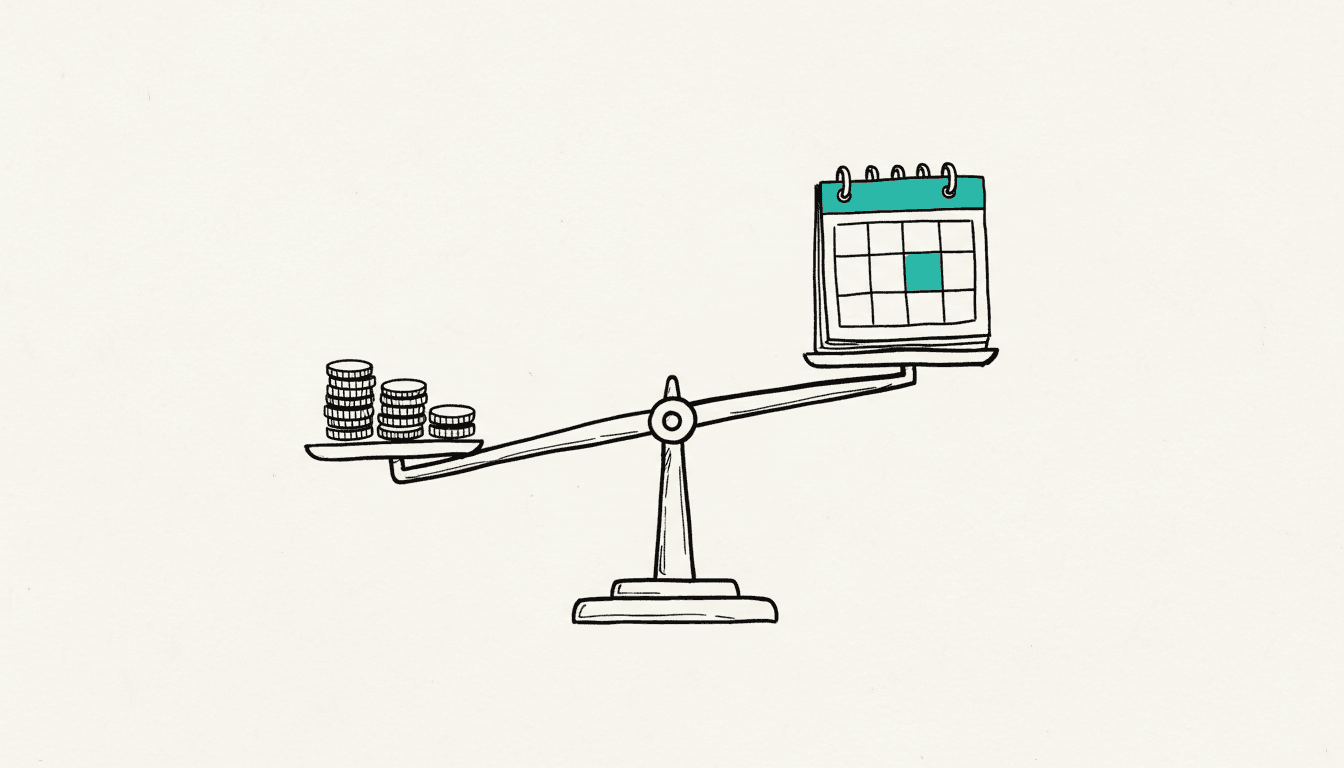
Many mid-sized companies face the same decision: hire an internal automation specialist, or first start with an external 30-day pilot. The answer doesn't depend on gut feeling, but on hard numbers: gross salary, non-wage labor costs, onboarding time, and the risk of a position that ends up underutilized. Anyone who wants to hire an internal automation specialist should know these numbers before posting the job ad.
What does an automation specialist actually earn in Germany?
According to StepStone, an RPA developer in Germany earns an average of €50,700 gross per year, with a range of €44,200 to €62,000, depending on experience and location. Gehalt.de puts the average for the same role higher, at €70,171 gross per year, with a range of €59,550 to €86,000, which shows how strongly the numbers vary depending on the data source and experience level. For Power Platform developers, the average according to Jobvector is €59,300 gross per year, with a range of €48,600 to €72,300; Glassdoor cites an average of €61,992 for the same role. For the more general title of automation specialist, Indeed reports a lower average of €48,195 gross per year. In practice, a realistic salary for an experienced automation specialist with an RPA or Power Platform focus lies between €50,000 and €70,000 gross, with Berlin and Hamburg at the upper end of the range.
What else comes on top of the gross salary?
The gross salary is only part of the actual personnel costs, because employers additionally pay around 21 to 25 percent in non-wage labor costs on top, mainly social security contributions plus levies and employers' liability insurance association contributions. With a gross salary between €50,700 and €62,000, this results in real personnel costs of about €62,000 to €77,500 in the first year, and that's before recruiting expenses, software licenses for UiPath or Power Automate, and onboarding time are even factored in. A newly hired automation specialist usually needs several months to get up to speed on systems, process documentation, and the tool stack before the first workflow runs productively; salary and non-wage labor costs continue to run during this time regardless of the result.
The shortage of skilled workers makes this worse: the German economy currently lacks around 109,000 IT specialists, as Bitkom shows in its current labor market study. Automation and Power Platform profiles are explicitly named in it as being in particularly high demand, which lengthens hiring processes and additionally drives up salaries. Bitkom's managing director Dr. Bernhard Rohleder frames the situation like this: artificial intelligence and automation cannot replace an IT department, but they can noticeably relieve IT specialists of a large share of tasks. This is exactly where an external pilot comes in, without a company itself having to compete for a rare specialist in a tight labor market.
How quickly does a 30-day pilot deliver the first productive workflow?
An external 30-day pilot delivers a first productive workflow in the same period in which a newly hired automation specialist is often still in onboarding. After the 30-day entry model, prioritization and setup take place in week one, the selection of the quick win in week two, implementation and handover including cheatsheets and mini-training in weeks three and four. At the end there is a workflow that runs in day-to-day operations, not a requirements document for the coming months.
What does each model really cost in the first year?
The following overview compares the real cost blocks, based on a mid-sized pilot project followed by SLA operation.
Internal hire, year 1:
- Gross salary: €50,700 to €62,000
- Non-wage labor costs (21 to 25 percent): approx. €12,000 to €15,500 additional
- Time to first productive workflow: several months of onboarding
- Ongoing cost block: salary continues regardless of utilization
- Contractual risk: notice period, illness, turnover
30-day pilot with NordFlux, year 1:
- One-time project costs: €8,000 to €15,000
- Time to first productive workflow: 30 days
- Ongoing operation: SLA from €600 per month, cancellable monthly
- Contractual risk: no fixed-cost risk
A pilot plus one year of SLA Silver thus comes to around €21,000 to €25,000 in the first year, while an internal hire alone comes to personnel costs of €62,000 to €77,500, without the first workflow necessarily having run productively yet in that year.
In shortAn internal automation specialist costs €62,000 to €77,500 in the first year in salary and non-wage labor costs alone, often without a single productive workflow. A 30-day pilot delivers the same result for €8,000 to €15,000, in one month instead of several.
When does an internal hire pay off anyway?
An internal automation specialist pays off above all when a company permanently runs several parallel automation projects at the same time and the workload justifies a full position throughout the year. At a manufacturing company with 80 to 200 employees that NordFlux has worked with, manually capturing supplier PDFs in 30 different formats effectively cost a full position in accounting. The entry point was a Quick Audit for €1,500 to €2,500, followed by a pilot for €8,000 to €9,000, which brought 5 to 8 hours of time savings per week, without a new position having to be created beforehand. Only once a single process turns into several and automation becomes core business does the calculation tip in favor of a permanent position, usually not until the second or third year. Until then, a pilot followed by SLA operation, as also accompanied by AI consulting from NordFlux, is the cheaper and faster route to the first productive result.
Frequently asked questions
What does an RPA developer cost on average in Germany?
According to StepStone, the average salary is €50,700 gross per year, with a range of €44,200 to €62,000. Gehalt.de cites a higher average of €70,171 for the same role.
What does a 30-day pilot with NordFlux cost?
A pilot over four to six weeks costs between €8,000 and €15,000 net, depending on process complexity, and delivers a productive, handed-over workflow at the end of the term.
Is an internal hire worth it if we only want to automate one process?
As a rule, no. For a single process, a pilot followed by SLA operation is cheaper and becomes productive faster than a new full-time position.
Can a company still build internally after the pilot?
Yes. The handover in the pilot includes cheatsheets and mini-training, so a team can continue to build on the basis later itself, or build an internal position specifically on top of it.
How long does it take for an internal hire to deliver the first workflow?
This depends heavily on prior experience and system landscape, but in practice several months often pass between hiring and the first productive result, simply due to getting up to speed on systems and process documentation.