
Why we don't build blackbox automation
Why we don't build blackbox automation
Blackbox automation means: no traceability, no escalation model, no documentation. That's not how we work at NordFlux.
Seven questions that separate a serious partner from a software vendor, from data sovereignty and tool neutrality to the question of who actually owns the solution in the end.

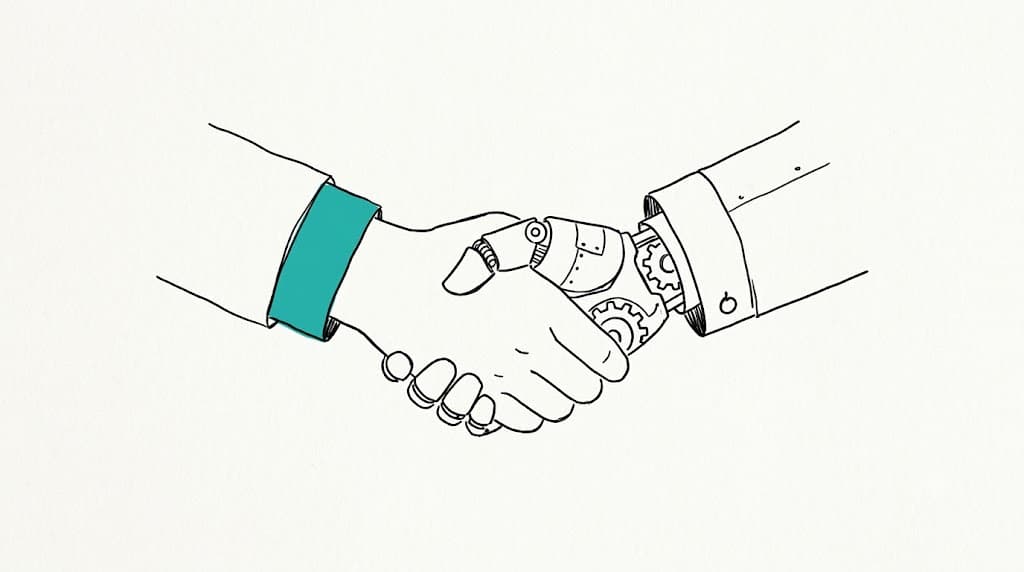
Anyone who awards an automation project is trusting a stranger with a look inside their own processes. That is no small step. The good news: you do not have to be an IT expert to recognise a serious partner. A few questions are enough, and their answers reveal a great deal.
Anyone who arrives with the solution before knowing the problem is selling software. A good partner first asks about your bottleneck and chooses the tool to match. Tool neutrality is not a detail; it decides whether the solution fits you or fits the provider's sales plan.
These seven questions quickly separate the wheat from the chaff:
A good partner makes themselves dispensable. They hand over a documented solution on your own systems, rather than tying you to them.
Serious partners propose small and concrete, a process with a measurable result, instead of a large transformation programme. Anyone who wants to sell the full package straight away shifts the risk onto you. Anyone who starts with a manageable first step shares it. A good first proposal is therefore not the most impressive, but the most manageable: a process you see in production in weeks rather than months and against whose result the collaboration can be honestly measured. Anyone who starts this way can always go further, but never has to.
Automation does not end at go-live. What matters is that someone who knows your business stays reachable. You can see how we work and which projects we have delivered in our case studies. The easiest way to check this is in a conversation: in a free initial call.
It is only fair to be measured against our own questions. We recommend tools vendor-neutrally and build, wherever possible, on your existing Microsoft licences instead of selling new ones. The solution runs on your systems and belongs to you after handover, documented and traceable. We deliberately start small and also say when something is not worth it.
Behind NordFlux stands Simon Glowik, Microsoft- and
As revealing as the right answers are, certain patterns are just as telling. You should prick up your ears when a provider ties you into a long-term contract without any objective reason for it. A solution that runs only on their accounts and that they will not hand over is a black box that makes you dependent, intended or not. A second warning sign is pressure: anyone who pushes for a quick yes, lures with tight deadlines or discounts and leaves no time to think rarely has your interest in mind. A lack of transparency belongs here too, for example when no one can clearly say where your data is stored or what the solution does in detail. A serious partner withstands every one of these questions, gives you time and explains instead of placating. Distrust is not a bad adviser here, but a justified filter.
They first ask about your problem, recommend the tool in a vendor-neutral way, build on your own systems and hand over a documented solution that you can keep running yourself.
Not from the outset. It makes sense to choose the tool based on the use case and to use existing licences first. Committing early often creates unnecessary dependency.
A clearly defined process with a measurable result, usually live in around 30 days. That keeps the risk small and makes the benefit visible early.
Founder of NordFlux. Spent four years automating processes at enterprise scale at Dräger, and now brings that depth to the mid-market — pragmatic and with full data sovereignty.
Certifications
Blackbox automation means: no traceability, no escalation model, no documentation. That's not how we work at NordFlux.
ISO 27001 as a selection criterion for automation partners: What the certificate really proves and what SMEs should check instead.
A copied n8n community workflow is a template, not a finished automation. What's missing and when consulting makes sense.
In a free initial call, you will quickly notice whether the chemistry and the answers add up. Vendor-neutral, honest, on your own systems.